Wellness
Your Brain on Mindfulness: What the Science Actually Shows
Neuroscientists have mapped what happens inside the skull during meditation — and the findings are reshaping how Houston's wellness community teaches the practice.
4 min read
Wellness
Neuroscientists have mapped what happens inside the skull during meditation — and the findings are reshaping how Houston's wellness community teaches the practice.
4 min read
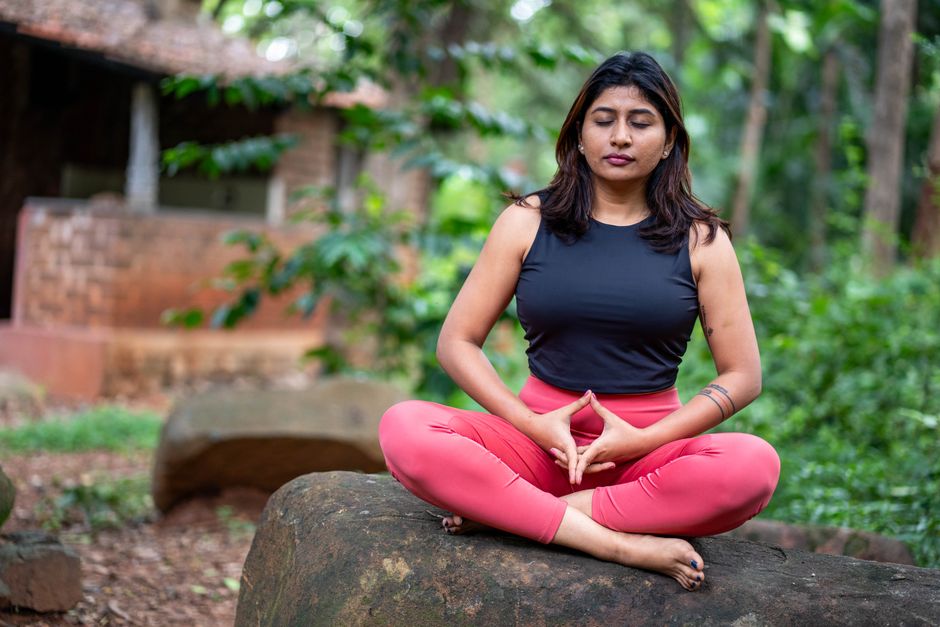
Sit still for eight weeks, 27 minutes a day, and your brain physically changes. That's not a wellness industry sales pitch — it's the finding from a landmark 2011 study out of Harvard Medical School, which used MRI scans to document measurable increases in gray matter density in the hippocampus, the region governing learning and memory, among participants who completed a structured mindfulness-based stress reduction program. Thirteen years later, that research sits at the foundation of a practice that has quietly embedded itself into Houston's gyms, medical clinics, and corporate campuses.
The timing matters. With summer heat index readings regularly topping 110 degrees Fahrenheit across Harris County, Houston residents are spending more time indoors, and mental health providers across the Texas Medical Center are reporting heightened patient interest in non-pharmacological tools for managing anxiety and chronic stress. The city's wellness infrastructure has responded in kind.
The short version: meditation doesn't just make you feel calmer. It rewires the default mode network, the brain circuit that fires when your mind wanders — the one responsible for rumination, self-referential thinking, and the low-grade dread that many people mistake for a personality trait. A 2019 study published in NeuroImage found that experienced meditators show significantly reduced activity in the posterior cingulate cortex, a key node in that network, during both meditation and ordinary rest. The brain, it turns out, can be trained the way a muscle can.
Cortisol is part of the story too. Chronic stress keeps the hypothalamic-pituitary-adrenal axis — the body's central stress-response system — running at elevated levels, which over time degrades prefrontal cortex function, the area responsible for decision-making and emotional regulation. A 2014 meta-analysis in JAMA Internal Medicine, drawing on 47 randomized controlled trials covering 3,515 participants, found that mindfulness meditation programs produced moderate evidence of improvement in anxiety, depression, and pain. The effect sizes were modest but consistent — and critically, they held up at follow-up assessments months later.
Two institutions are doing the most serious work on this front locally. The Chopra Center's affiliated programming at the Memorial Hermann Ironman Sports Medicine Institute on Kirby Drive incorporates mindfulness protocols into recovery plans for both competitive athletes and cardiac rehab patients. Meanwhile, the University of Houston's Cougar Health Services launched an eight-week Mindfulness-Based Stress Reduction course in spring 2025, modeled directly on the Jon Kabat-Zinn curriculum developed at UMass Medical School in 1979. The UH course runs $95 for students and $175 for community members — one of the more accessible price points in the city.
On the Heights Boulevard corridor, studios like Kindred Yoga have begun pairing seated meditation blocks with explicit neuroscience education, handing participants printed summaries of the prefrontal cortex research before class. The approach acknowledges what many practitioners have privately recognized: Houston's professional class wants evidence before it commits to anything, including stillness.
The Texas Medical Center, the largest medical complex in the world by most measures, has also pushed the practice into clinical settings. The Center for Integrative Medicine at UTHealth Houston on Fannin Street offers mindfulness instruction as part of its integrative oncology consultations, citing research that shows reduced inflammatory markers in cancer patients who maintain a consistent practice.
For anyone considering starting: the research suggests frequency matters more than duration. Three 10-minute sessions spread across a week produce more measurable neurological benefit than a single 30-minute block. Apps like Insight Timer — free, with over 200,000 guided sessions — lower the barrier to entry considerably. The UH Cougar Health Services program opens registration again in September 2026. For anything touching on existing anxiety disorders, sleep pathology, or medication management, a conversation with a physician or licensed mental health professional at one of the TMC's member institutions is the right first step before any structured program.
About this article
Published by The Daily Houston
Spread the word
Daily brief
Free, in your inbox before 7am. Weekdays.